
Concept
High-Level Concept
Framework Structure
Conceptual Development Approach
“Structure every phase. Assess every outcome. Infrastructure development conceived as systematic and enduring.”
The TransAndean Corridor framework defines a phased, assessment-driven approach to infrastructure development. Implementation advances only where technical, financial, and regulatory feasibility is demonstrated.
Each phase enables progressive validation, disciplined capital deployment, and adaptive system design. Infrastructure systems are structured to support cross-regional connectivity, scalability, and long-term operational resilience.

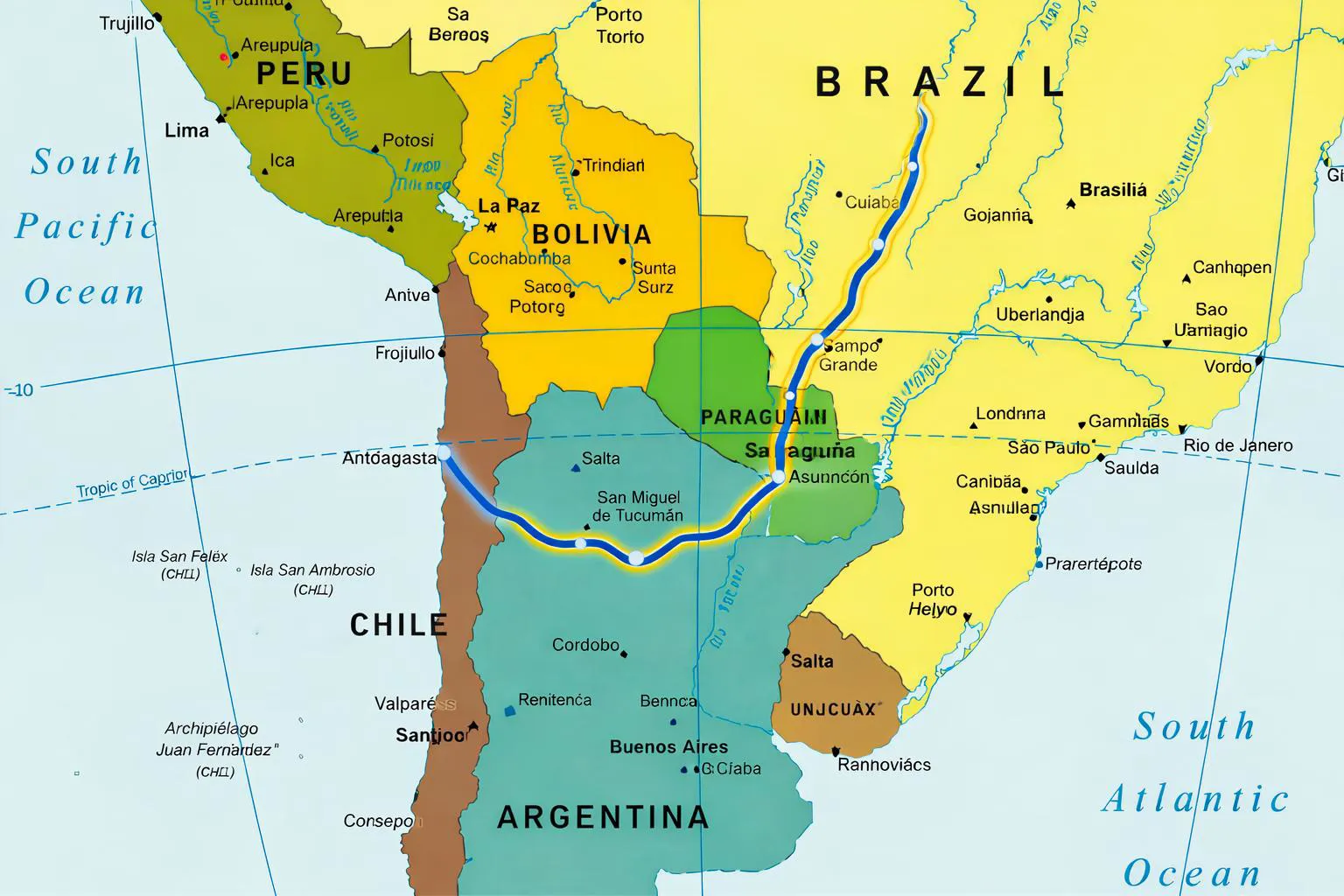
Architectural Principle
The Trans-Andean Corridor is conceived as a system of autonomous infrastructure segments, developed and operated independently in their initial phases, and progressively integrated as technical, regulatory, and economic conditions converge.
This approach allows each segment to be viable on a standalone basis, while preserving full interoperability and future cross-border integration.
Development
Implementation Phases
Structured development delivered through sequential phases, progressing only upon technical, regulatory, and stakeholder validation.
Phase 01
Planning & Assessment
Preliminary feasibility, corridor definition, and stakeholder alignment.
Phase 02
Design & Engineering
System design, technical specifications, and engineering validation.
Phase 03
Construction & Integration
Phased construction, system integration, and performance verification.
Phase 04
Operations & Maintenance
Operational deployment, asset optimization, and long-term maintenance.

Assessment
Strategic Assessment
Framework
Integrated evaluation to validate technical, financial, and regulatory readiness across all development stages.
Technical Feasibility
Engineering validation of system requirements and integration capacity.
Financial Viability
Economic analysis, funding structure, and capital discipline review.
Regulatory Compliance
Alignment with applicable law, environmental, and permitting frameworks.
Framework
Framework Principles
Layered Integration
Multi-dimensional systems structured to operate across scales and domains, subject to technical and operational feasibility assessments.
Continuity Considerations
Operational continuity is examined across network nodes, with implementation subject to reliability and consistency assessments.
Scalability Framework
Frameworks structured to accommodate expansion and adaptation, subject to demand assessment and viability review.
Resilience Assessment
Systems examined for disruption tolerance and functionality maintenance, subject to condition-based performance evaluation.
Operational Review
Processes and approaches subject to efficiency assessment, with quality and reliability parameters defined through review.
Stakeholder Coordination
Stakeholder engagement structured to facilitate alignment across participants, subject to review and adjustment based on assessment outcomes.